
Starbucks Faces Payment Disruptions After Vendor Ransomware Attack
Last updated:
A Bitter Brew: Starbucks Caught in the Crossfire of a Cyberattack
In a recent turn of events, Starbucks, the global coffee giant, has found itself entangled in the aftermath of a ransomware attack on one of its third-party vendors. This cyber incident has led to significant disruptions in the company’s ability to pay its baristas and manage their schedules.
The Fallout
The ransomware attack, which occurred late last week, has impacted the vendor’s systems, causing a ripple effect that has reached Starbucks’ operations. As a result, many Starbucks employees are unable to access their schedules or track their hours worked. This has forced cafe managers to resort to manual calculations to determine employee pay.
While the outage has not affected Starbucks’ customer service, it has created considerable inconvenience for its workforce. The company is currently paying employees for their scheduled shifts, which may lead to overpayments or underpayments depending on the actual hours worked.
Starbucks’ Response
In response to the situation, Starbucks has emphasized its commitment to ensuring that its baristas are compensated fairly. The company has stated that it will prioritize paying employees for all hours worked, regardless of the challenges posed by the vendor’s system outage.
As the investigation into the ransomware attack continues, Starbucks is working diligently to mitigate the impact on its employees and restore normal operations as soon as possible. The company is also likely to learn valuable lessons from this incident, which could lead to increased cybersecurity measures and contingency plans to protect against future cyber threats.
Mitigating Risk with PDX IT
To safeguard against such cyberattacks and their potential consequences, businesses like Starbucks can partner with experienced IT service providers like PDX IT. By leveraging advanced cybersecurity solutions and proactive monitoring, PDX IT can help organizations:
- Detect Threats Early: Proactive monitoring and threat detection can identify potential vulnerabilities and malicious activity before they can cause significant damage.
- Implement Robust Ransomware Protection: Strong security measures, including regular backups, endpoint protection, and user education, can help prevent and mitigate ransomware attacks.
- Minimize Downtime: In the event of a cyberattack, a well-prepared incident response plan can help minimize downtime and restore operations quickly.
- Ensure Business Continuity: By maintaining business continuity plans, organizations can continue their operations even in the face of disruptions.
By partnering with PDX IT, businesses can strengthen their cybersecurity posture, reduce the risk of cyberattacks, and protect their critical assets, including their employees and customers.
The Broader Implications
This incident highlights the increasing vulnerability of businesses to cyberattacks, even those that are not direct targets. As the digital landscape continues to evolve, companies must remain vigilant and invest in robust cybersecurity measures to safeguard their operations and protect their customers and employees.
It also underscores the importance of diversifying vendor relationships and having strong contingency plans in place to minimize the impact of such disruptions.
Related reading: proactive cybersecurity services, The Evolving Face of Ransomware: Why Prevention and Resilience are Your Only Hope and Krispy Kreme Gets a Bad Taste: Cyberattack Bites into Donut Giant.
Request an IT assessment
Tell us a little about your business and a PDX IT team member will follow up to schedule an assessment. Prefer to talk? Call 971-331-4871.

About the author: Steve Shaff
Steve Shaff is the owner of PDX Information Technology Services, a managed IT provider he founded in 2020. From the Tualatin office he helps businesses across Portland Metro & Southwest Washington with IT support, cybersecurity and compliance. More about Steve · Contact PDX IT
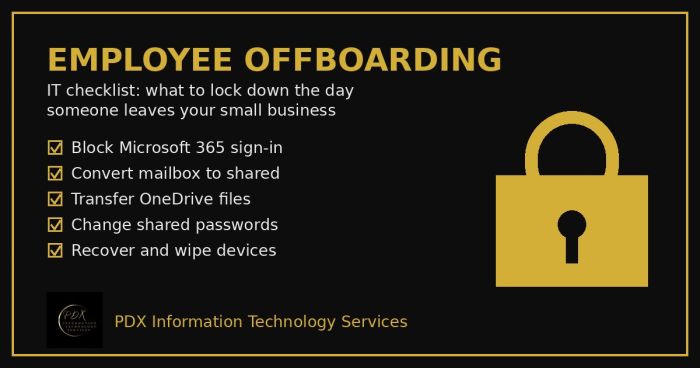
Portland employee offboarding IT checklist: lock Microsoft 365, save the mailbox and OneDrive files, change shared passwords and wipe company devices.
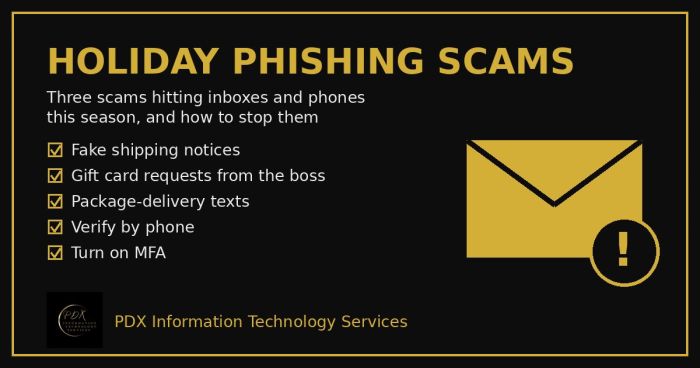
Holiday phishing scams are hitting Portland small businesses: fake shipping notices, gift card requests from the boss and delivery texts. How to stop them.
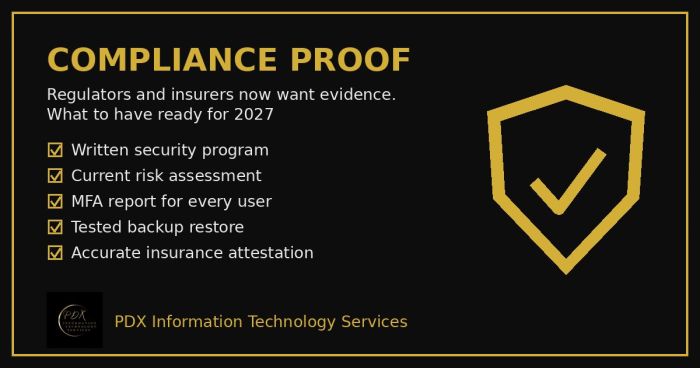
Cybersecurity compliance proof: HIPAA, CMMC, the FTC and cyber insurers now want documented evidence, not promises. See the checklist for 2027.