
Yet, Another Data Breach that could have been easily avoided.

A laptop containing personal information of Health Share of Oregon members was stolen from the organization’s nonemergency transportation provider in November, Health Share announced.
Health Share, a coordinated care organization with more than 300,000 Medicaid clients in the Portland metro area, learned of the breach on Jan. 2. The CCO issued a news release Wednesday saying that the stolen laptop was from GridWorks’ office on Nov. 18.
More than 654,000 individuals’ personal information was involved. It is not known whether the computer thief found or used members’ information, which included names, addresses, phone numbers, dates of birth, Social Security numbers and Medicaid ID numbers. Personal health histories were not exposed.
“Though the theft took place at an external vendor, we take our members’ privacy and security very seriously,” Dr. Maggie Bennington-Davis, Health Share’s interim CEO and chief medical officer, said in a written statement. “We are committed to providing the highest quality service to our members, which includes protecting their personal information.”
GridWorks ran into financial difficulties last year and was placed into receivership, after transportation companies it contracts with complained they weren’t paid. Health Share in October announced it would shift administration of its Ride-to-Care program to CareOregon.
Health Share plans to step up privacy and security inspections and will offer one year of free credit monitoring and restoration services.
Request an IT assessment
Tell us a little about your business and a PDX IT team member will follow up to schedule an assessment. Prefer to talk? Call 971-331-4871.

About the author: Steve Shaff
Steve Shaff is the owner of PDX Information Technology Services, a managed IT provider he founded in 2020. From the Tualatin office he helps businesses across Portland Metro & Southwest Washington with IT support, cybersecurity and compliance. More about Steve · Contact PDX IT
JPMorgan Chase says attackers hit third-party vendors and accessed marketing data that may include customer names and emails, which a ransomware gang then leaked. Here’s what Chase customers should do, and the vendor checklist Portland-area business owners can use so their customer list isn’t next.

The FBI warned that ARTEX, an AI hacking tool, can take some intrusions from first targeting to privileged access in under three hours. Here’s what that means for Portland and Vancouver small businesses, and the checklist I’d put in place this week.
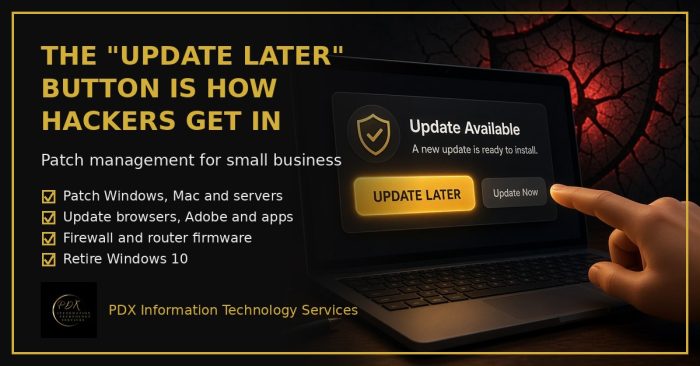
Exploiting unpatched software is now the most common way breaches start, and small businesses are most of the ransomware victims. Here’s what skipping updates really costs and the patching checklist I’d put in place this week.